Tonk Star Classic Card Game
Garia Games LtdCard
4.6914.00 Reviews
- Version
- 3.9.9.409
- Installs
- 100.00K
- Age Rating
- Teen
Screenshots
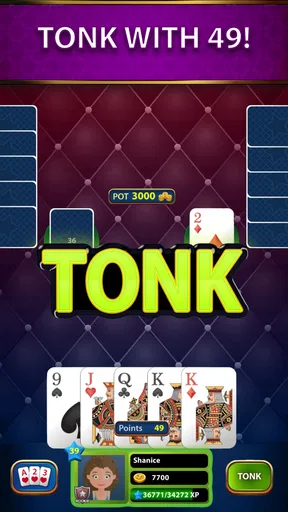
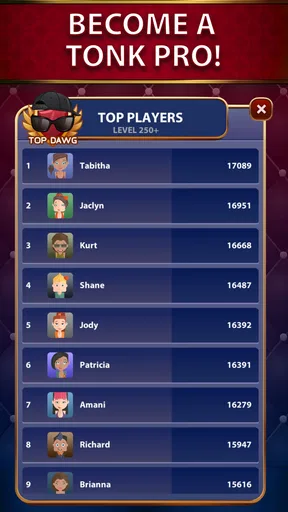
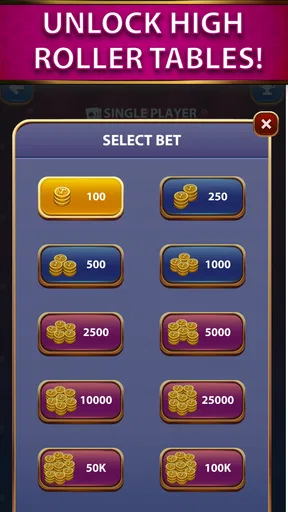
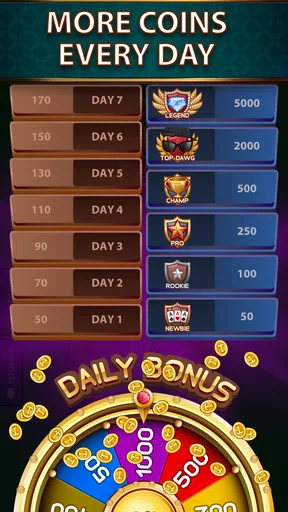
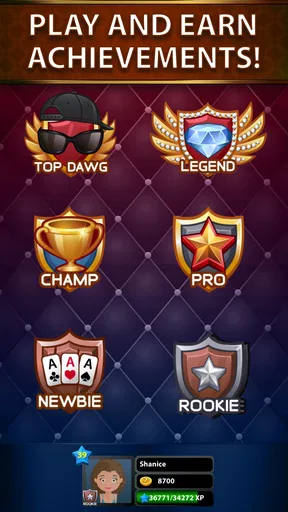
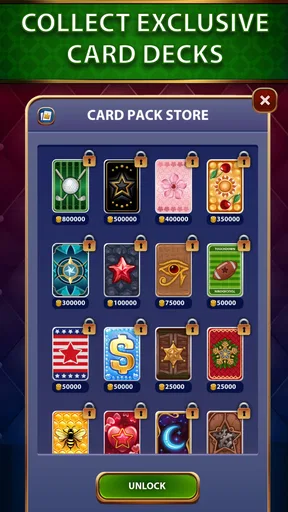

Our Review of Tonk Star Classic Card Game
 Analysis by Appyee
I enjoy card games that are easy to start but still reward careful decisions, and Tonk Star Classic Card Game aims squarely at that space. It is a free mobile game from Garia Games Ltd built around Tonk, a traditional card game whose appeal comes from choosing when to draw, when to form useful combinations, and when to stop taking risks. I found it more interesting than a simple time-killer because every hand asks me to balance short-term improvements against the possibility of giving an opponent a better opportunity.
The game has a focused identity rather than trying to become an all-purpose card collection. Its store summary presents it as classic Tonk with the original rules, while its short label, Tonk Star, keeps the presentation brief. That matters if you are looking for a recognizable ruleset instead of a game overloaded with unrelated modes. At the same time, anyone unfamiliar with Tonk should expect a small learning curve, especially around the timing of a knock or the value of holding certain cards for too long.
Where new players usually get stuck
The first obstacle is not installing the game; it is understanding what the current hand is asking you to do. Tonk looks familiar to people who know rummy-style card games, but its decisions are not identical to simply collecting matching cards. A hand can appear promising while still leaving too many loose cards, and a move that improves your own total may also reveal useful information to another player. I recommend treating the opening turns as information-gathering rather than chasing a perfect combination immediately.
I also found that new players can focus too heavily on the cards they want and overlook the cards they are giving up. Before drawing, I mentally divide my hand into three groups: cards already working together, cards that could connect with more than one possibility, and cards that are only being kept out of hope. The third group deserves suspicion. If a card has no practical relationship to the rest of the hand after several turns, keeping it can be more dangerous than discarding it simply because it feels valuable.
The original-rules positioning is useful for experienced Tonk players, but it can make the opening experience less forgiving for someone expecting a heavily guided tutorial. I would not judge the game after one rushed hand. The better test is whether the rules begin to feel predictable after a few careful rounds. Once the basic rhythm becomes familiar, the fun comes from reading the changing shape of the hand rather than from tapping quickly.
Another common sticking point is deciding whether to end a hand or continue improving it. Players who always wait for a stronger arrangement may expose themselves to unnecessary risk. Players who end too early may miss a chance to reduce their total. I use a simple check before committing: what cards remain unmatched, how many realistic improvements are available, and what is the cost if the next draw is unhelpful? That habit is more useful than memorizing one universal strategy.
Reading the table instead of chasing one card
A practical technique is to remember discarded cards that would have completed your likely combinations. This does not require perfect card counting. I only need to notice when several useful connectors have already appeared. If the cards I am waiting for are disappearing, I stop building around that plan and switch to reducing the damage from unmatched cards. This makes the game feel less random because my decisions respond to the hand’s actual history.
I also avoid holding several high-value cards just because they might become part of a set. A possible combination is not the same as a reliable one. When two cards depend on the same narrow outcome, I usually keep the one that can connect in more than one direction and release the other sooner. This is one of the small decisions that separates a thoughtful Tonk session from repeatedly drawing and hoping.
For a friend trying the game for the first time, I would explain the goal in plain language: build useful groups, keep the unhelpful remainder under control, and do not let a single attractive card dictate the whole hand. That advice is more practical than presenting the rules as a list of isolated actions. It also helps answer an important question before installation: if you dislike games where the best move depends on evaluating incomplete information, this may feel more demanding than its simple card interface suggests.
Setup checks before blaming the game
Tonk Star Classic Card Game is free to install, and it carries a Teen content rating. It supports devices running Android 7.0 or later, so the first sensible check is compatibility rather than immediately troubleshooting gameplay. If the game does not appear or does not install as expected, confirm the device software and available storage, then retry through the normal app store process. Those basic checks solve more setup problems than changing unrelated phone settings.
The game has a current version identified as 3.9.9.409. If an older installation behaves differently from what you expect, checking for an available update is worthwhile. I would also close other demanding apps before launching a card game on an older device. Tonk itself is not the kind of title I choose for graphics performance, but background pressure can still make any mobile app feel slow or unstable.
Because the game includes optional in-app purchases ranging from $0.99 to $79.99 per item, I would review purchase controls before handing the phone to a child or letting someone else use the account. The Teen rating is a useful reminder that this is not presented as a small-child title. The game can be enjoyed without treating every session as a spending opportunity, but it is still sensible to keep purchases deliberate and separate from the excitement of a close hand.
One setup question many players have is whether the game is worth trying if they have never played Tonk. My answer is yes, provided they are willing to learn through several rounds instead of expecting every rule to be obvious at once. A player who already knows the classic game should reach the useful part much faster. Someone who wants a completely passive game with no decisions may prefer a simpler solitaire-style alternative.
A calmer first-session routine
My preferred first session is short and deliberate. I begin by observing the card layout and identifying the combinations that are genuinely available, rather than trying to force a favorite pattern. I then make one decision at a time and pay attention to how the hand changes after each draw or discard. This approach reduces the feeling of being lost and gives me a clearer sense of whether the rules and pacing suit me.
I also recommend avoiding purchases during the first few sessions. First learn whether you enjoy the core Tonk loop, whether the interface feels comfortable on your screen, and whether the game’s style matches the way you normally play. Since the title is already free, there is no need to spend money to answer those questions. That is especially important for players who are mainly looking for an occasional five-minute distraction.
If the game appears stuck during installation or launch, I would use ordinary, low-risk steps: confirm the connection, restart the app, restart the device, and check for an update. I would avoid repeatedly clearing data unless I understood what might be removed. General troubleshooting should protect the player’s progress and account context rather than treating every problem as a reason to reset everything.
Recovering a session when the workflow goes wrong
Card games are easy to follow when the hand moves smoothly, but a pause or accidental exit can make it unclear what to do next. My first recovery step is to reopen the game and give the current screen a moment to settle before tapping repeatedly. Rapid taps can make it harder to tell whether the app is responding or whether the screen is simply waiting. If the hand returns, I take a second to reconstruct my plan instead of making an immediate discard.
When I lose track of my intended combination, I return to the three-part hand check: cards already useful, cards with multiple possible connections, and cards with no convincing role. This prevents a disrupted session from turning into random play. It is also a good way to recover after a mistake. Rather than trying to remember every previous thought, I evaluate the hand from its present state and choose the least risky continuation.
A particularly useful recovery habit is to stop treating a failed plan as a personal error. If the cards needed for a combination have already passed through the discard pile, continuing to wait is not persistence; it is sunk-cost thinking. I release the plan, protect the hand from oversized leftovers, and look for a more flexible arrangement. That workflow is valuable in Tonk because the best decision often changes as the available cards change.
Players sometimes ask whether a poor hand means the app is malfunctioning. Usually, a disappointing hand is simply part of a card game. I distinguish a rules problem from an unlucky result by checking whether the actions remain consistent: cards should behave according to the stated game logic, while the quality of the draw can naturally vary. If the interface is responsive and the hand follows the familiar structure, I would adjust my strategy before assuming something is broken.
Keeping decisions clear on a small screen
On a phone, a crowded hand can encourage hurried taps. I slow down enough to identify the card I am discarding and verify that I am not breaking a useful group. This sounds obvious, but it is one of the few mistakes that can be prevented entirely. I also avoid playing while distracted by a conversation or while switching repeatedly between apps, because Tonk rewards remembering what has already appeared.
If a round is interrupted, I do not immediately undo my previous plan by discarding the card I had just decided to keep. I re-evaluate the whole hand. A pause can make a card look unfamiliar even though it remains strategically useful. This small reset keeps recovery logical rather than emotional and is more dependable than trying to recreate the exact sequence of thoughts from before the interruption.
Another practical tip is to use short sessions while learning. Playing one focused hand teaches more than starting a long session while guessing at the rules. It also makes it easier to notice whether the game’s pace suits you. For me, the strongest use case is a break where I can concentrate for a few minutes, not background play while doing something else.
When the app is not the cause
Not every frustrating result comes from the game. Tonk naturally creates moments where a player improves a hand and still loses the timing battle. That is part of the tension, but it can feel unfair if I only remember the cards I wanted. I get a more accurate view by asking whether I had a safer discard, whether I held a narrow possibility too long, and whether I waited for a perfect hand when a good stopping point was available.
Device conditions can also affect the experience. A nearly full phone, an aging operating system, or too many apps running at once may create delays that look like a game problem. Before reinstalling, I would check the basics and try the title after a clean restart. If other apps are also slow, the wider device environment is the more likely place to investigate.
Connection conditions are another sensible consideration whenever a mobile game behaves inconsistently. I would test the app on a stable connection, avoid switching networks in the middle of a hand, and give the game time to respond before repeating an action. These are general precautions, not promises that every issue will disappear, but they help separate a temporary device or network interruption from a genuine problem with the app.
There is also a difference between wanting classic Tonk and wanting a modern card-game package. Tonk Star is the better fit for someone who values the traditional rules and the decisions within a hand. A broader card-game collection may be better for a player who wants solitaire, poker, collectible decks, or several unrelated modes in one download. A more social alternative may suit someone whose main goal is chatting with friends rather than concentrating on the cards.
Who should choose it, and who should skip it
I would recommend this game to players who already enjoy rummy-like decision-making, traditional card rules, and short sessions where the outcome depends partly on judgment and partly on the draw. It is also a reasonable way for a curious newcomer to learn Tonk without committing to a paid download. The average rating of 4.6 from around 5.9 thousand ratings and more than 100 thousand installs suggest that it has found a meaningful audience, though popularity alone should not replace checking whether the rules appeal to you.
I would be more cautious recommending it to someone who wants a highly animated, story-driven card game or a title that explains every decision in detail. The Teen rating may also make it unsuitable for families searching specifically for a child-oriented card experience. And if you find yourself frustrated whenever a hand requires abandoning a promising plan, the game’s central trade-off may feel like irritation rather than entertainment.
The purchase range is another reason to decide your boundaries early. I prefer to treat the free version as the complete test of whether the game belongs on my phone. If optional items become part of your routine, set a clear limit before playing rather than making a purchase after a frustrating loss. The best experience here comes from improving how you read the hand, not from assuming that spending will solve a strategic problem.
My practical verdict after settling into the rhythm
Tonk Star Classic Card Game works because it keeps its attention on one traditional game instead of burying the experience under unnecessary variety. I like that its appeal grows after the first few hands: the cards become easier to read, the risk of holding weak combinations becomes clearer, and stopping at the right moment starts to feel like a skill rather than a guess.
Its limitations are tied to the same focus. Players wanting extensive variety may find a dedicated Tonk game narrow, and beginners may need patience before the original rules feel natural. The free entry point is helpful, but the presence of optional purchases means I would still approach the game with sensible spending controls. Those are manageable concerns, not reasons to dismiss it, as long as your expectations match the product.
For an everyday scenario, I can see myself opening it during a quiet commute break or while waiting for an appointment, playing a focused hand, and closing it without needing a long setup. The useful habit is to enter with a plan to observe, not merely to win: track which combinations remain realistic, discard dead weight before it grows, and reassess after every interruption. That makes even an ordinary hand feel purposeful.
My final recommendation is simple: choose this game if you want classic Tonk with room for thoughtful decisions, and skip it if you need a broad collection or a heavily guided casual experience. Garia Games Ltd has made a focused card game that is easy to try for free and rewarding once its trade-offs become familiar. I would install it for short, attentive sessions, keep purchases under control, and give myself enough hands to learn the rhythm before deciding whether it is a keeper.
Verdict
Strengths of Tonk Star Classic Card Game
- Quick rounds make it easy to play during short breaks.
- Simple rules are accessible to both beginners and card-game fans.
- Smooth controls make drawing and discarding cards feel natural.
- Offline play is useful when you have no internet connection.
- Classic visuals keep the focus on the card game itself.
Limitations of Tonk Star Classic Card Game
- Limited variation may make matches feel repetitive over time.
- The interface can feel dated compared with newer card games.
- Random card deals may occasionally create frustrating matches.
- Few strategic options may disappoint experienced players.
- Ads can interrupt the experience, depending on the version used.
Similar Picks in This Category
View All
Solitaire - Classic Card Games
MobilityWare4.6

UNO!™
Mattel163 Limited4.3

Spider Solitaire: Card Games
MobilityWare4.6

Solitaire.com - Classic Cards
Tripledot Studios Limited4.7

Plants vs. Zombies™ Heroes
ELECTRONIC ARTS4.1

Hearthstone
Blizzard Entertainment, Inc.4.1
Frequently Asked Questions
What is Tonk Star Classic Card Game?
Tonk Star Classic Card Game is a digital version of the traditional Tonk, or Tunk, card game. It focuses on forming valid combinations and reducing the value of cards left in your hand before your opponents do. The app is designed for quick rounds, simple card-game controls, and players who enjoy classic multiplayer-style gameplay on a mobile device.
How do you play Tonk Star Classic Card Game?
At the beginning of a round, players receive cards and take turns drawing and discarding while trying to create sets or runs. The objective is generally to lower your hand’s point value or go out at the right moment, depending on the selected rules. New players should review the in-game instructions because scoring, knocking, and winning conditions can vary.
Can I play Tonk Star Classic Card Game offline?
Offline availability may depend on the version of Tonk Star Classic Card Game and the specific features you want to use. A local or practice mode may work without a continuous connection, while online matches, leaderboards, advertisements, account services, or rewards usually require internet access. It is best to check the store listing and test the game after installation.
Is Tonk Star Classic Card Game free to download?
Tonk Star Classic Card Game may be available as a free download, but free access does not always mean that every feature is completely free. Mobile card games commonly include advertisements, optional purchases, virtual currency, or premium benefits. Before downloading, review the app-store information for pricing, in-app purchases, supported devices, and any subscription terms.
Is Tonk Star Classic Card Game suitable for beginners?
Yes, the game can be suitable for beginners who are familiar with basic playing-card concepts, although Tonk’s rules may feel unfamiliar at first. The main challenge is learning when to keep cards, build combinations, discard safely, or end a round. Starting with practice games and reading the rules carefully makes the learning process much easier.
Play our best games!


